Nickel powder is a critical feedstock for high-performance additive manufacturing. It underpins components used in aerospace propulsion systems, energy infrastructure, oil and gas equipment, defense platforms, and high-temperature industrial applications, parts that must meet demanding mechanical, thermal, and reliability standards.
At the same time, manufacturers across these sectors are facing mounting pressure to reduce carbon emissions, strengthen domestic supply chains, and preserve access to critical raw materials. Scarcity of primary nickel resources, geopolitical volatility, and Scope 3 emissions targets are reshaping how advanced materials are sourced and qualified. For additive manufacturing to scale responsibly, feedstock strategy is becoming just as important as part design.
A recent independent Life Cycle Assessment (LCA) conducted by Oregon State University’s Industrial Sustainability Laboratory provides quantified insight into what that strategy can look like in practice. The cradle-to-gate study evaluated the global warming potential (GWP) of nickel powder production for additive manufacturing, comparing conventional virgin-material gas atomization with recycled-material production routes enabled by Continuum Powders’ plasma arc atomization technology at its Houston facility.
Life cycle assessment results for nickel powder production
The study modeled three production scenarios. The baseline reflected conventional gas atomization using 100% virgin nickel. That pathway was compared to recycled-material routes incorporating reclaimed feedstock.
The findings were significant.
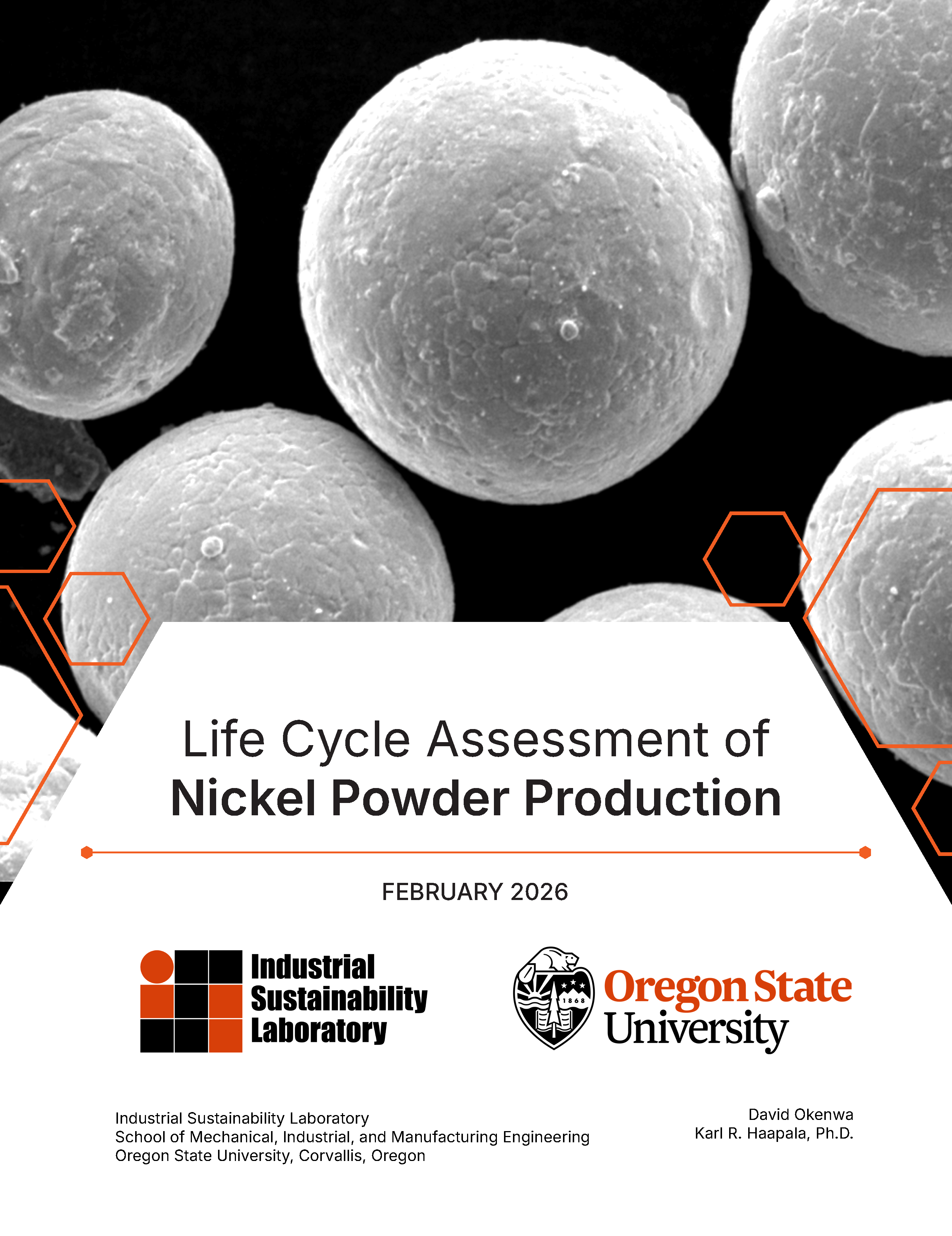
When recycled nickel feedstock was introduced, modeled GWP decreased by 58.8% relative to the virgin baseline. When additional sustainability measures—such as lower-carbon electricity and argon sourcing—were included, modeled reductions reached 98.7%.
Notably, the 98.7% reduction reflects the modeled performance of Continuum Powders’ Houston production pathway when paired with cleaner energy and inert gas sourcing, demonstrating that near-total emissions reduction is not theoretical, but achievable under commercially viable operating conditions.
The analysis also clarified where remaining emissions originate. In recycled-material scenarios, argon and electricity were the dominant contributors to GHG impact. This reinforces a practical conclusion: feedstock selection and utility sourcing represent the most powerful levers for reducing the carbon intensity of nickel powder production.
What this means for additive manufacturing supply chains
For OEMs, service bureaus, and contract manufacturers, this data reframes powder sourcing as a strategic decision, not simply a materials procurement exercise.
Reclaimed nickel feedstock reduces dependence on newly mined raw material, helps preserve critical resources within domestic supply chains, and provides a measurable pathway to lowering Scope 3 emissions. Importantly, these reductions can be achieved without altering powder qualification standards or compromising mechanical performance.
As additive manufacturing transitions into higher-volume production, sustainability performance and supply resiliency are becoming differentiators. Independent life cycle data allows manufacturers to evaluate suppliers based on quantified environmental impact, not marketing claims.
Turning sustainability data into practical action
Continuum Powders produces a broad portfolio of high-performance nickel alloys—including 718, 625, M247, and copper-nickel grades—using reclaimed feedstock transformed through its Melt-to-Powder platform. By combining certified revert streams, advanced atomization technology, and disciplined process control at its Houston facility, Continuum has positioned itself as a center of excellence for reclaimed nickel-based powders.
The Oregon State LCA reinforces what production data already suggests: when recycled feedstock is paired with optimized utilities and process control, dramatic emissions reductions are possible without sacrificing powder quality, flowability, chemistry control, or application performance.
As additive manufacturing continues to mature, the future of nickel powder will be defined not only by how well it performs, but by how responsibly it is produced.