As binder jet additive manufacturing continues to mature, the industry is placing greater emphasis on material consistency, process stability, and production-ready performance. For high-temperature nickel superalloys like low-carbon M247 (M247LC), those requirements become even more critical.
A recent study conducted by the Rice University Particle Flow & Tribology Laboratory evaluated reclaimed M247LC powder produced through Continuum Powders’ Greyhound Melt-to-Powder process. The research focused on comparing the behavior of reclaimed M247LC against conventionally sourced metal powders commonly used in additive manufacturing and assessing whether reclaimed feedstock could meet the demands of modern binder jet production.
The findings reinforced something manufacturers are increasingly beginning to recognize: reclaimed powder, when processed correctly, can deliver production-capable performance without sacrificing quality.
The study focused heavily on powder flowability and spreadability, two characteristics that play a major role in binder jetting success. Poor powder flow can lead to inconsistent layer deposition, density variation, and ultimately unreliable part quality. According to the Rice University testing, Continuum’s reclaimed M247LC powder demonstrated highly favorable flow characteristics and produced uniform powder spreading behavior during recoating evaluations.
Researchers observed stable layer formation and strong powder packing behavior, both of which are essential for achieving repeatable builds in binder jet systems. The study also noted that the powder exhibited morphology and flow performance consistent with what manufacturers would expect from high-quality additive manufacturing feedstock.
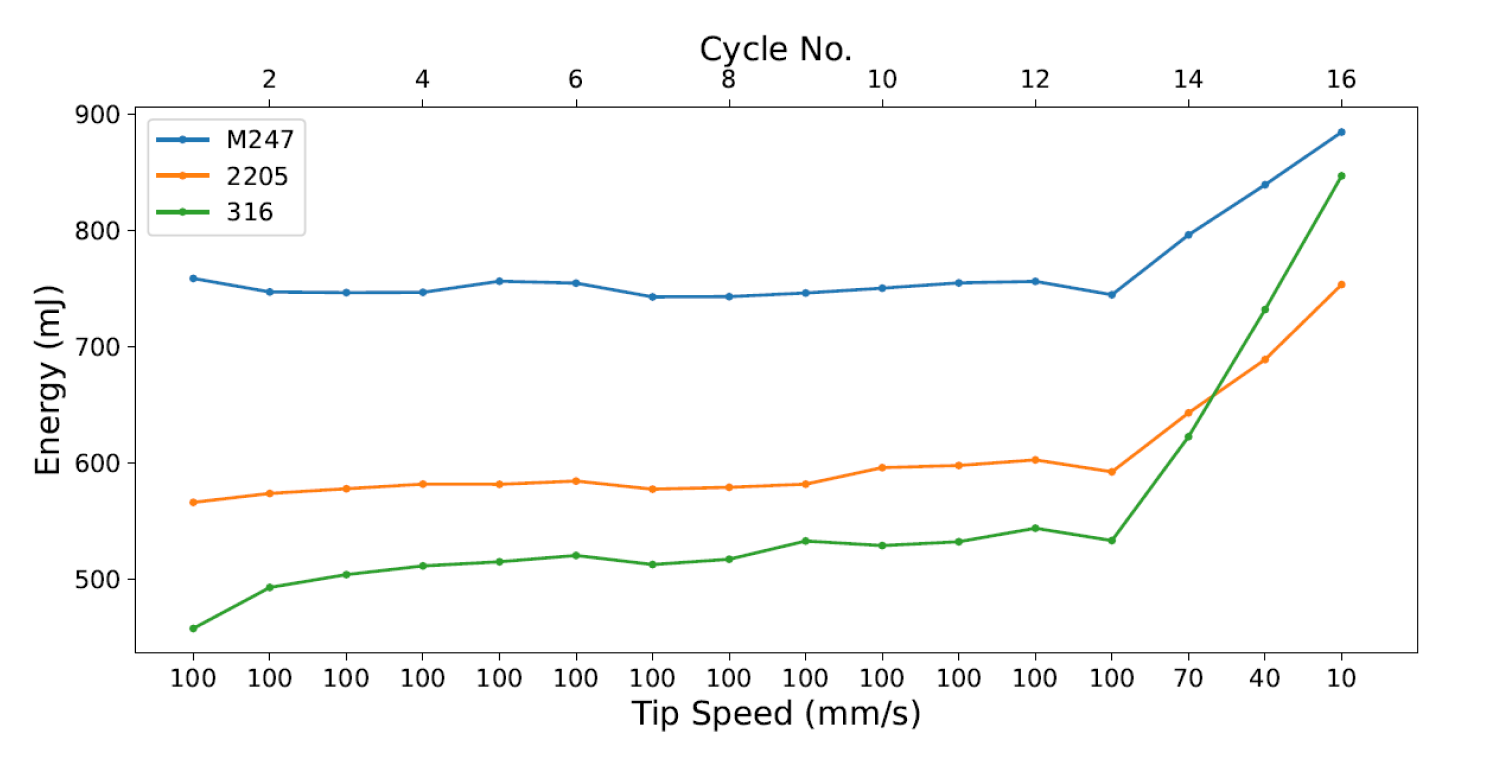
Downward flow energies associated with the SVFR test
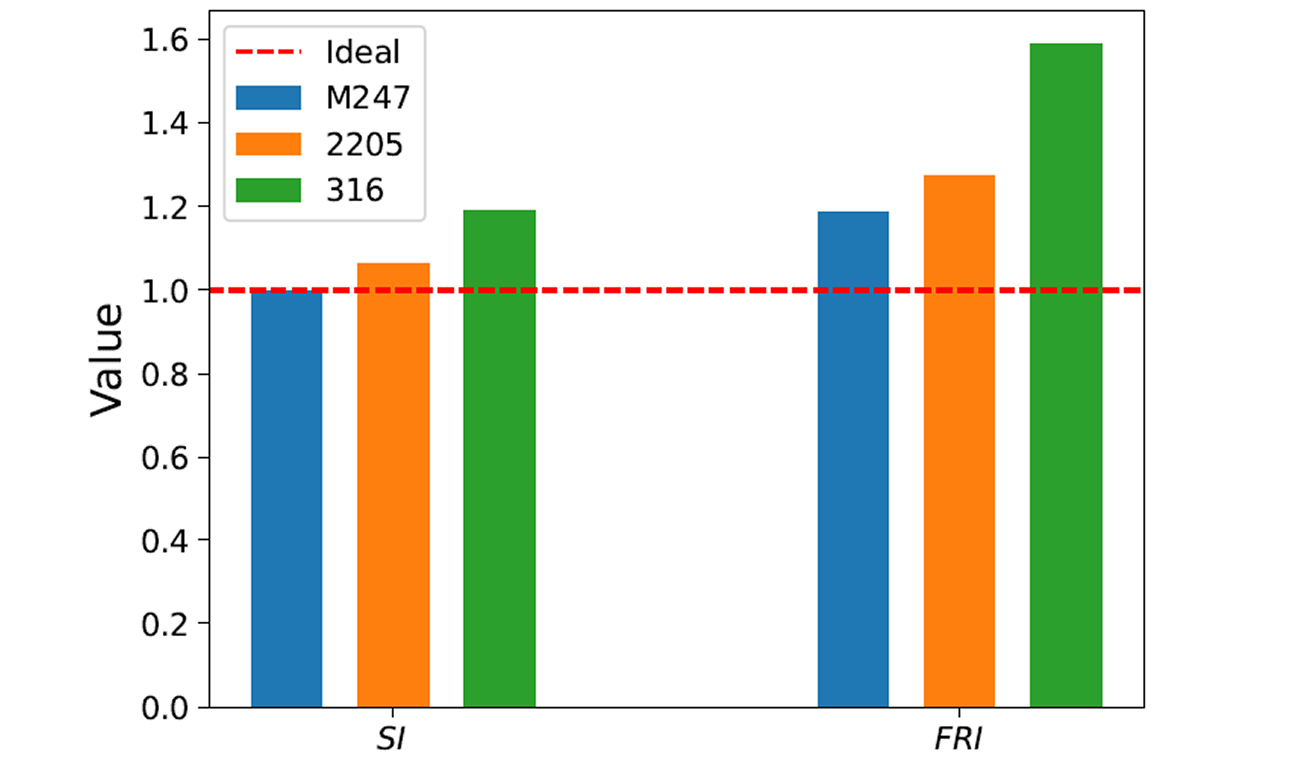
Flow stability indices related to constant flow rate (SI : Stability Index) and variable flow rate (FRI : Flow Rate Index)
One particularly important takeaway from the research was the relationship between powder characteristics and production scalability. Binder jetting relies on extremely consistent powder behavior across large build areas and long production runs. Variability in particle size distribution, morphology, or flowability can quickly impact throughput and repeatability. The Rice University results showed that reclaimed M247LC powder can maintain the level of consistency required for serious manufacturing environments, not just laboratory demonstrations.
The work also contributes to a broader industry conversation around material sourcing and sustainability in additive manufacturing. Historically, many manufacturers viewed reclaimed feedstock as a compromise. The assumption was that recycled or reclaimed material might introduce variability or reduced performance compared to virgin atomized powders.
Studies like this continue to challenge that perception.
By validating the flow performance and processing behavior of reclaimed M247LC powder, the Rice University research demonstrates that circular material pathways can support advanced manufacturing applications while helping reduce dependence on traditional raw material supply chains.
For manufacturers exploring binder jetting for aerospace, energy, and industrial applications, the implications are significant. High-temperature alloys such as M247LC are notoriously difficult to process due to their chemistry and thermal behavior. Demonstrating stable powder performance with reclaimed feedstock helps expand the conversation around scalable, cost-effective production routes for these materials.
The study also reinforces the importance of powder engineering itself. Powder performance is not simply determined by whether material is virgin or reclaimed. The atomization process, feedstock preparation, chemistry control, and post-processing methods all play a critical role in determining how powder behaves inside an additive manufacturing system.
As additive manufacturing moves further into production environments, third-party validation studies like this will continue to matter. Manufacturers want data, repeatability, and confidence that materials can perform consistently under real-world production conditions.
The Rice University findings provide another strong data point supporting the role reclaimed metal powders can play in the future of industrial additive manufacturing.