In advanced manufacturing, few superalloys carry the price — or the performance expectations — of M247. Whether specified as Mar-M247 or its low-carbon variant, M247LC, it consistently sits at the higher end of the cost spectrum in both wrought and powder form.
That premium pricing is not arbitrary. It reflects the chemistry of the alloy, the critical nature of the elements it contains, the complexity of processing it, and the extreme environment in which it operates. To understand the cost of M247, you must look inside the alloy itself —and outward to the global supply chains that support it.
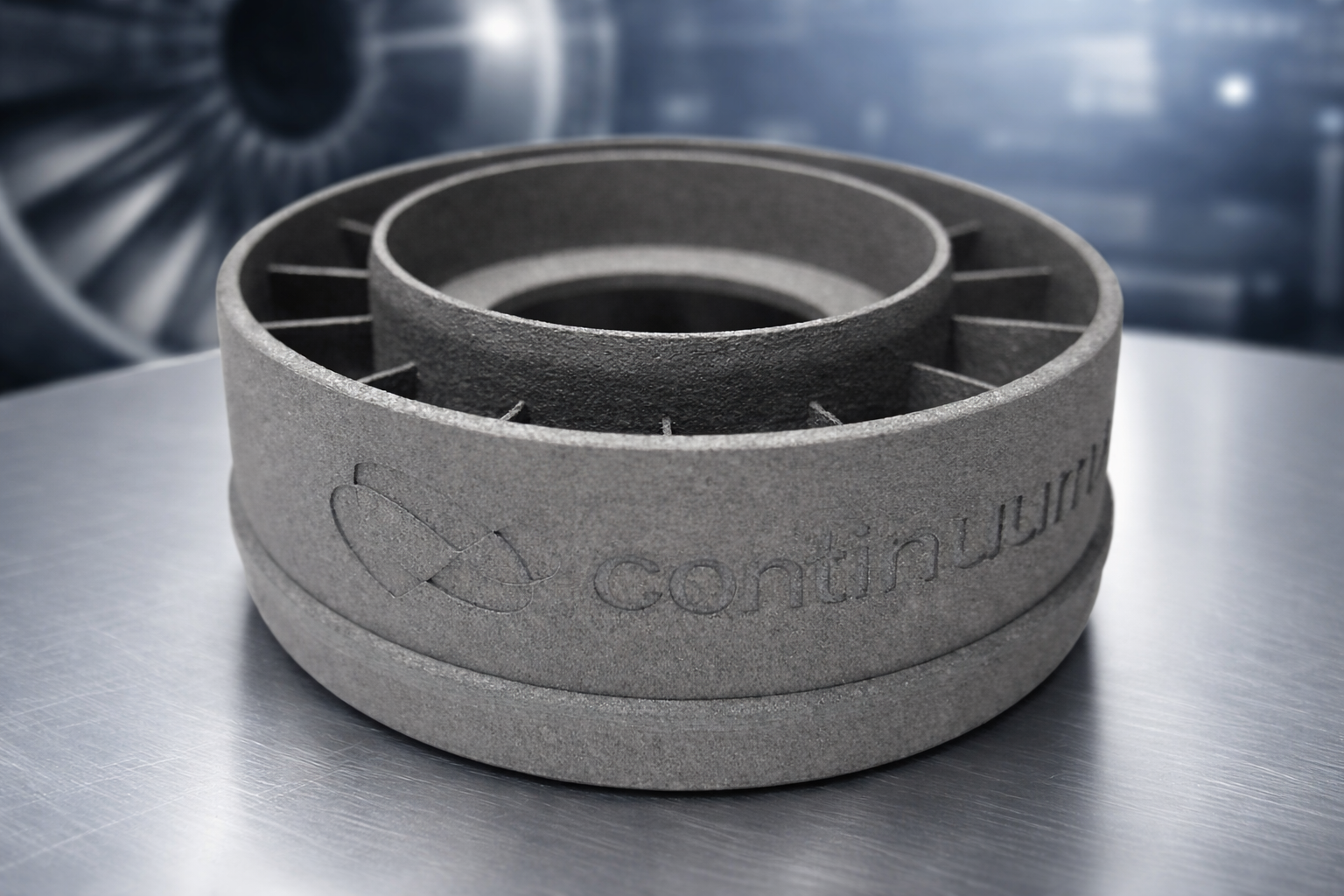
Chemistry Designed for Extremes
M247 was engineered for sustained performance in extreme temperature and stress environments, particularly gas turbines and aerospace hot-section components. It is a precipitation-strengthened nickel-based superalloy with a high-volume fraction of gamma prime (γ′), the phase responsible for its exceptional high-temperature strength.
Unlike alternative nickel alloys such as Inconel® 718, M247 incorporates significant quantities of refractory and strategic elements. In addition to nickel and chromium, it typically contains substantial cobalt and tungsten, along with tantalum, aluminum, titanium, and controlled additions of hafnium, carbon, and boron.
Several of these elements are structurally expensive. Tantalum and hafnium are classified as critical minerals with limited global production. Their supply chains are geographically concentrated, capital-intensive, and slow to expand. According to the U.S. Geological Survey, the United States remains highly import-reliant for tantalum.
Hafnium has similarly constrained availability due to its dependence on zirconium refining.
Cobalt, another major alloying addition in M247, is well known for price volatility and geographic concentration of supply.
When these materials are incorporated at meaningful percentages, particularly tungsten and cobalt at nearly double-digit levels, the raw material cost-basis of M247 rises quickly. This is not a lightly alloyed system. It is intentionally dense with performance-driving elements.
For manufacturers operating in aerospace, energy, and defense, this introduces a second layer of concern beyond price: supply chain resiliency. Heavy reliance on imported critical minerals exposes programs to geopolitical risk, transportation delays, and cost volatility that can ripple through production schedules. This is where sourcing strategy becomes as important as alloy selection.
M247 vs. M247LC: Why the Distinction Matters
It is important to note that not all M247 variants are identical from a processing standpoint.
Traditional M247 contains higher carbon content and is historically associated with cast turbine components. Its chemistry, particularly its refractory loading, requires very high melt temperatures and carefully controlled casting environments.
M247LC, the low-carbon variant, was developed to improve weldability and crack resistance while maintaining high-temperature strength. In powder-based and additive manufacturing applications, low-carbon M247 is often preferred because it offers improved processing behavior without sacrificing core performance attributes.
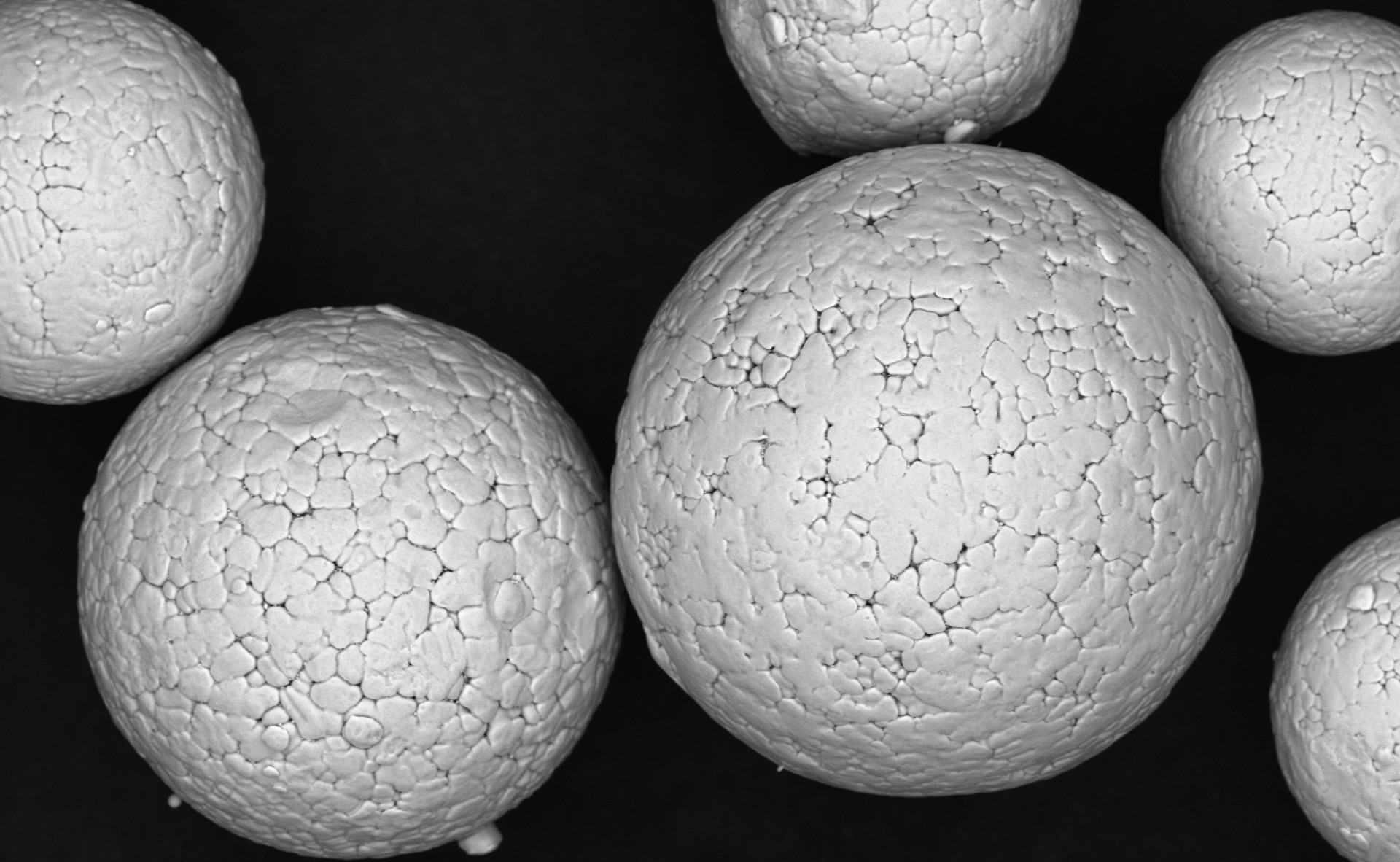
OptiPowder M247LC Microstructure – 3,800X
From a production standpoint, refractory-heavy superalloys demand significant thermal capability during melting and atomization. Not all facilities are equipped to process the highest refractory load chemistries. As a result, many modern powder programs — particularly in additive manufacturing — focus on M247LC where processing control and alloy integrity can be maintained more consistently.
Critical Minerals and the Case for Domestic Circular Supply
M247, particularly in either its standard or low-carbon form, maintains a premium price in part because the elements that give it strength at 1,000°C and beyond are the same elements that global supply chains struggle to produce at scale.
These materials cannot be easily substituted without fundamentally altering creep resistance and oxidation performance. Nor can primary mining be scaled quickly in response to demand. Mining and refining cycles are long, heavily regulated, and capital-intensive.
However, there is another pathway: reclaiming high-value superalloy scrap and reverting it into certified, production-grade powder within a domestic supply chain.
By sourcing feedstock from controlled scrap streams — including aerospace and turbine-grade revert — manufacturers can reduce dependency on newly mined critical elements while keeping high-value materials in circulation. When that reclaiming and refinement occurs domestically under strict analytical control, it strengthens both economic and national supply chain resilience.
For alloys like M247LC, where tantalum, cobalt, and tungsten content materially influence cost, circular manufacturing is not simply a sustainability narrative. It is a strategic response to structural material risk.
Continuum’s model is built around that principle. Through domestic melt-to-powder production and rigorous analytical verification, Continuum produces low-carbon M247 powder from certified scrap feedstock, maintaining full traceability and chemistry control. In doing so, critical alloying elements remain in-country and in-use, rather than re-entering volatile global raw material markets.
This approach does not change the intrinsic chemistry of the alloy. But it can meaningfully improve supply chain stability and reduce exposure to primary mining volatility.
Melt Complexity and Powder Production Challenges
High refractory loading and elevated aluminum content make M247 — including its low-carbon variant — more demanding to melt and process than more common alloys such as Inconel® 718.
Chemistry control windows are tight. Small deviations in aluminum, titanium, carbon, or refractory content can significantly influence gamma prime formation and long-term creep performance. Refractory elements like tungsten and tantalum increase melt temperature requirements and can reduce atomization yield efficiency during powder production.
This is one reason why production capability and analytical infrastructure matter so significantly. Producing low-carbon M247 powder requires not only sufficient thermal capability, but precise chemistry verification, oxygen control, and particle size management to ensure consistent additive manufacturing performance.
For powder suppliers operating in high-temperature superalloys, the differentiator is not simply the ability to atomize molten metal. It is the ability to maintain alloy integrity from feedstock selection through final particle certification.
The Real Economics of M247LC
Whether in cast form or as low-carbon powder for additive manufacturing, M247 sits at the intersection of complex chemistry, critical mineral dependency, and demanding processing requirements.
Its price reflects that reality.
But within that structural cost lies an opportunity. By reclaiming and refining high-value superalloy scrap domestically, manufacturers can retain the performance benefits of M247LC while strengthening supply chain resiliency and reducing dependence on newly mined critical minerals.
In today’s environment, material selection is no longer only about strength at temperature.
It is also about stability of supply, control of critical inputs, and long-term strategic resilience.
And for low-carbon M247, those factors increasingly define the true cost equation. Contact us today for a quote.