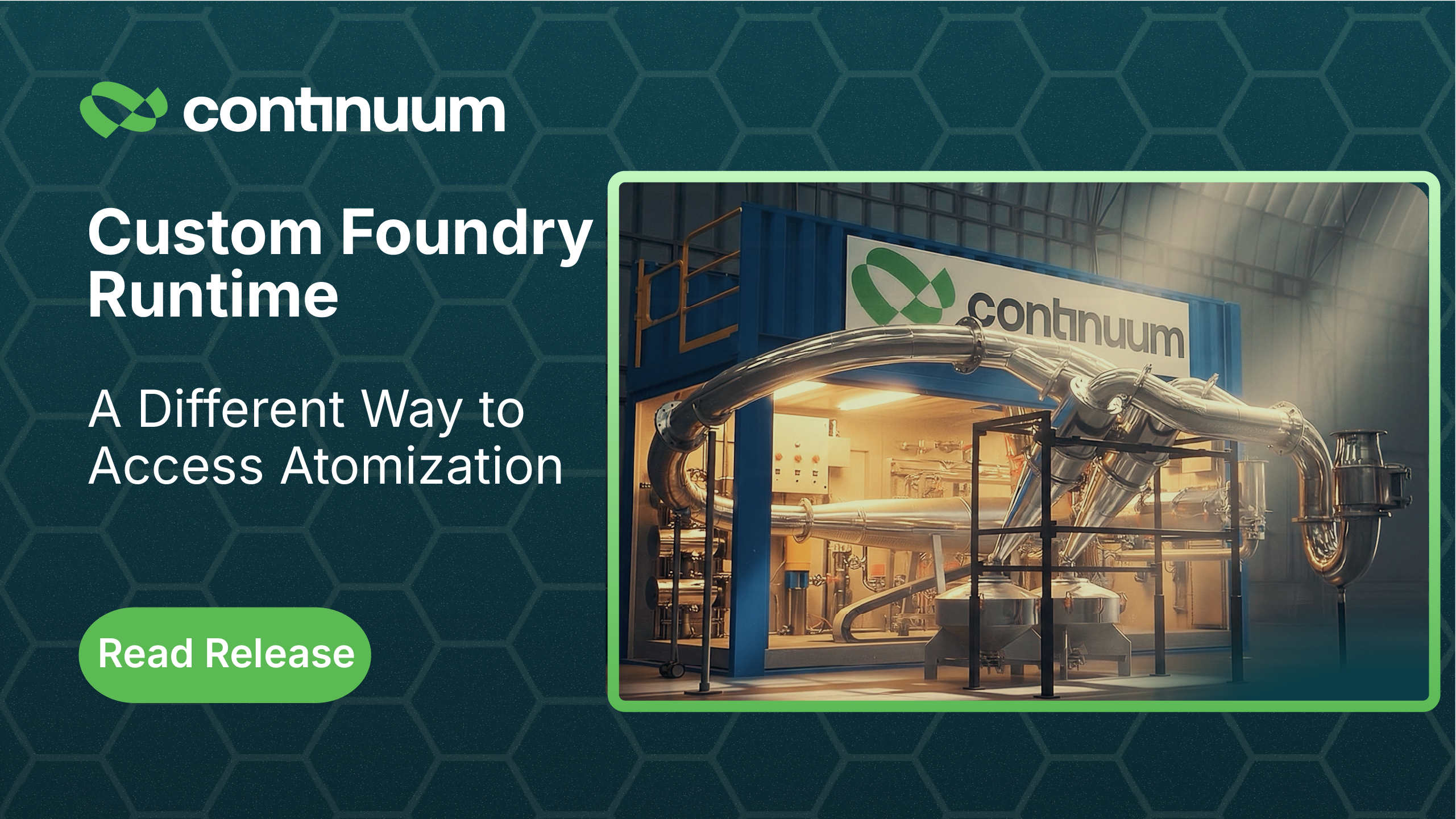
A Different Way to Access Atomization
Most atomization models are built around output. Continuum Powder’s Custom Foundry Runtime (CFR) is not.
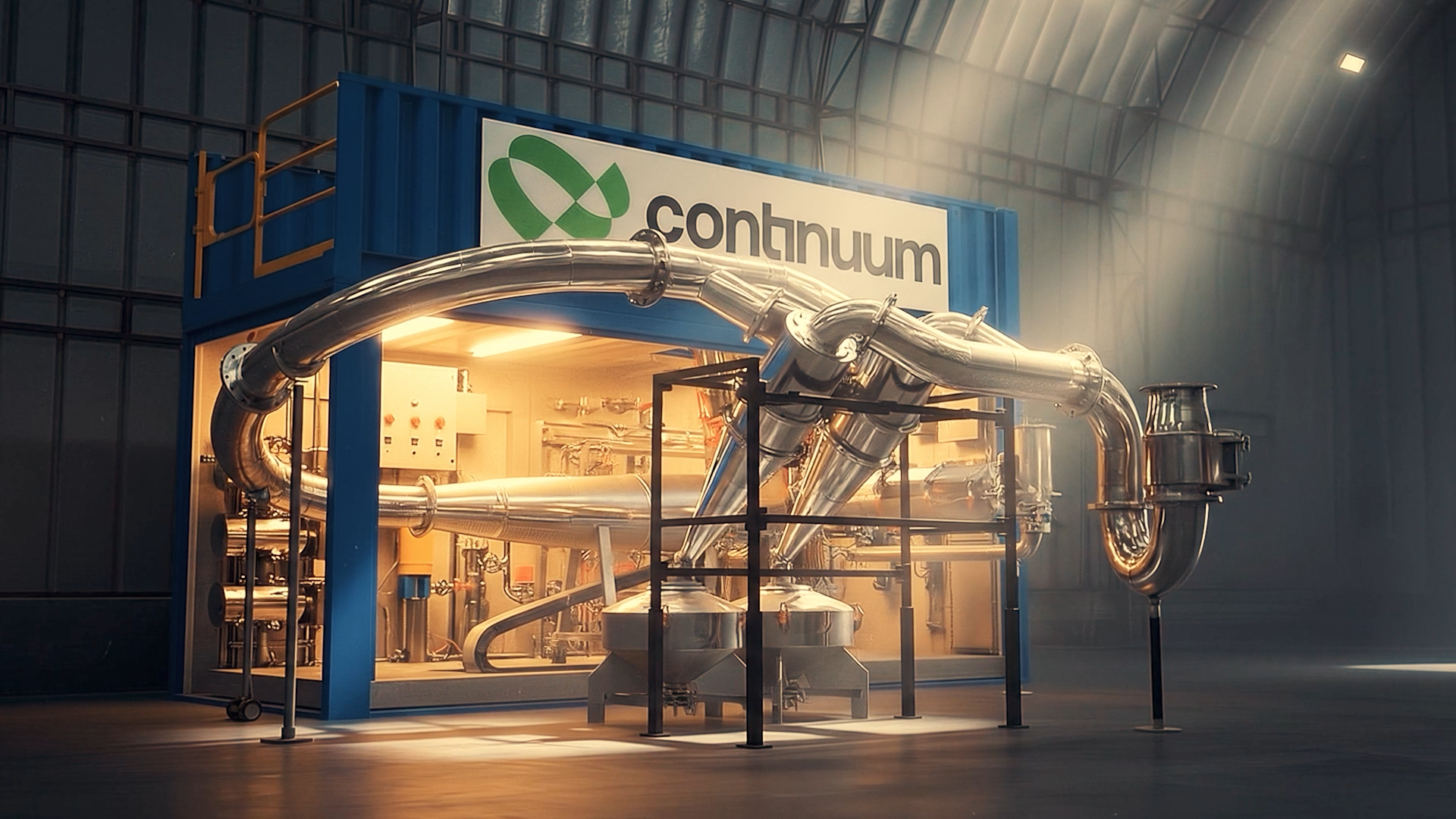
CFR provides structured, runtime-based access to Continuum Powders’ Greyhound gas atomization platform, enabling teams to develop, validate, and scale materials without being constrained by per-kilogram production assumptions.
That distinction becomes critical early in a program’s lifecycle. Alloy development, process validation, and initial production are not defined by throughput—they are defined by iteration. Chemistry needs to be refined, parameters need to be tested, and outcomes need to be understood before scale becomes the priority.
By shifting the model from output to runtime, CFR allows teams to focus on those variables first, rather than forcing them to optimize for yield prematurely.
Where Traditional Models Create Friction
In conventional atomization environments, programs are often expected to behave like production before they are ready.
That expectation introduces friction at exactly the wrong point in the process. Teams are pushed to justify volume before validating performance, or to prioritize efficiency before establishing repeatability. The result is often a constrained development cycle, where iteration is limited not by technical capability, but by commercial structure.
CFR was developed to remove that constraint by aligning access to atomization with how advanced manufacturing programs actually evolve.
Download Brochure
CFR helps maximize the value of reclaimed superalloys, tightly controlled revert streams, and precious metal blends by preserving chemistry, minimizing contamination, and proving process behavior before full-scale production.
A Runtime-Based Approach to Technical Development
Structuring atomization access around runtime changes how engineers approach program design.
Instead of anchoring decisions around kilograms produced, runs can be designed to generate insight. That includes refining alloy chemistry, evaluating process windows, and understanding how atomization conditions influence powder characteristics such as morphology and particle size distribution.
This approach is particularly valuable when working with modified chemistries or unfamiliar material systems, where multiple iterations are required to converge on a viable solution. By removing output pressure, CFR allows those iterations to happen in a more controlled and intentional way.
Supporting Iteration Without Forcing Scale
A significant portion of advanced manufacturing work exists between early-stage R&D and full production. These programs are often technically demanding but don’t yet justify high-volume output.
In traditional models, they can be difficult to support.
CFR enables these efforts to move forward through controlled, small-batch runs designed for learning and validation. Output remains an outcome of the process, but not the primary constraint. Typical production ranges—approximately 100 kg/day for more complex or multi-variable trials and up to 500 kg/day under stable conditions—provide sufficient material for evaluation while preserving flexibility during execution.
This allows teams to build confidence in both material and process before committing to scale, reducing risk as programs progress.
Maximizing Value from High-Value Feedstock
Not all feedstock should be treated the same.
When working with high-value materials—such as reclaimed superalloys, tightly controlled revert streams, or precious metal blends—the objective extends beyond maximizing throughput. Preserving chemistry, minimizing contamination, and understanding process behavior become equally important.
CFR supports this by removing the need to optimize purely for yield. Instead, teams can approach atomization with a more balanced objective, evaluating how process conditions impact both material performance and recovery.
For certain material streams, this creates opportunities that would otherwise be limited under conventional models. Materials that might be downgraded or treated as scrap can instead be evaluated and refined in a controlled environment, often unlocking significantly more value in the process.
From Process Validation to Controlled Production
One of the more persistent challenges in advanced manufacturing is the transition from development into production.
In many cases, that transition introduces a break in continuity. Programs are restructured, pricing models change, and process assumptions are revisited, creating new variables at the exact moment teams are trying to reduce them.
CFR is designed to minimize that disruption.
Because the framework remains consistent, programs can begin as tightly scoped trials and evolve into repeatable production runs without requiring a fundamental reset. This continuity enables more consistent data generation across program phases and reduces variability introduced by shifting between different operating models.
For engineering teams, that translates to a clearer and more efficient path to production.
Structured Execution with Defined Guardrails
Flexibility in execution is only effective when it is supported by structure.
Each CFR engagement is aligned upfront to ensure clarity around feedstock requirements, runtime allocation, and program objectives. All programs are reviewed prior to execution to validate scope and expectations, and internal coordination across sales, operations, quality, and finance ensures consistency throughout the process.
Runtime is explicitly defined as machine time rather than output volume, providing a stable framework for planning and evaluation. Optional services, such as precision sieve cuts, can be incorporated depending on program requirements, but the underlying structure remains consistent.
This balance between flexibility and control is what allows CFR to support both exploratory development and production-oriented work.
Where CFR Creates the Most Value
CFR is particularly effective in programs where iteration, control, and flexibility are more important than immediate scale. This includes:
- Alloy development involving new or modified chemistries
- Process validation and parameter exploration
- Small-batch production of specialty or difficult-to-process materials
- Programs utilizing high-value or sensitive feedstock streams
In each case, the ability to structure work around runtime rather than output allows teams to move forward with fewer constraints and greater technical clarity.
Aligning the Model with the Reality of Development
At its core, CFR reflects a shift in how atomization access is structured.
Alloy development and process validation are inherently iterative processes. They require flexibility, structured experimentation, and a framework that supports learning before scale. Attempting to force that work into an output-first model does not make it more efficient—it simply makes it more difficult to execute effectively.
By aligning the commercial model with the technical reality of development, CFR provides a more practical path from initial concept through controlled production.
For organizations working at the edge of material and process capability, that alignment can make a meaningful difference. And not just in how programs are executed, but in how quickly they move forward.
Connect with our team to get started.