Over the past several years, the metal additive manufacturing industry has seen a steady increase in powder production capacity.
New facilities are being announced. Existing producers are expanding. Additional investment continues flowing into domestic manufacturing infrastructure as aerospace, defense, energy, and industrial manufacturers seek more resilient supply chains and greater access to critical materials.
On the surface, this seems like a straightforward success story for the industry. More capacity should mean greater material availability, improved supply security, and broader adoption of additive manufacturing technologies.
Yet an important question is beginning to emerge:
As powder production becomes more widely available, what will actually differentiate suppliers?
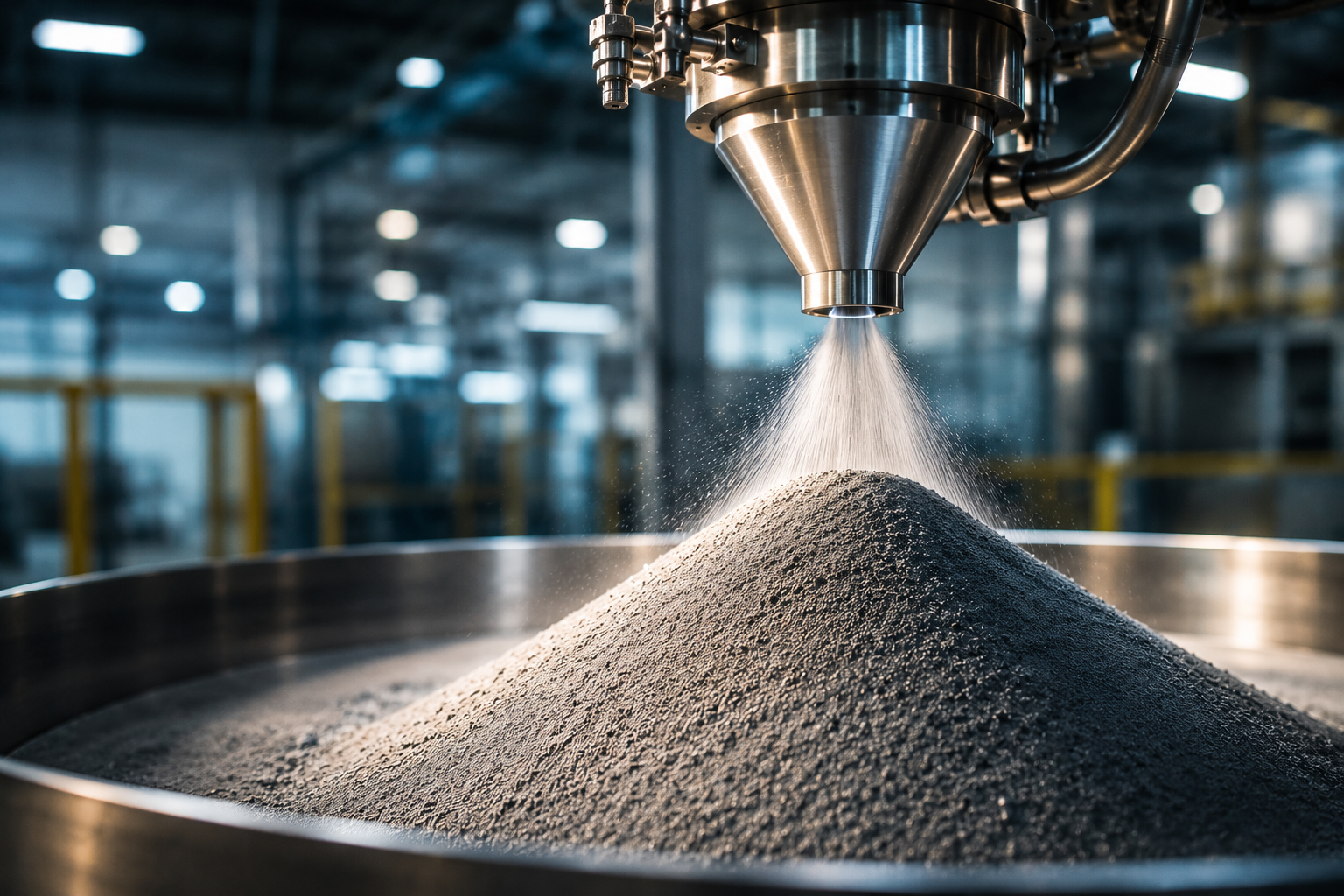
For much of the industry's history, the ability to produce high-quality powder at scale was itself a significant competitive advantage. Today, however, the conversation is evolving. As more powder production capacity enters the market, manufacturers are increasingly looking beyond material availability and asking a different set of questions.
How quickly can new alloys be developed? How efficiently can materials move from development to qualification? How resilient is the supply chain supporting those materials? And how can manufacturers maximize value throughout the entire material lifecycle?
The answers to those questions may ultimately prove more important than production capacity alone.
Capacity Is Becoming Table Stakes
For years, powder availability was one of the primary constraints limiting additive manufacturing adoption. Today, that landscape is changing.
Governments, investors, and manufacturers are collectively investing in domestic production capabilities across a wide range of alloy systems. New atomization facilities are being built. Existing producers are expanding capacity. Supply chains that once relied heavily on a limited number of suppliers are becoming more diversified.
This is a positive development for the industry. However, as powder production becomes more accessible, simply producing powder is becoming less of a differentiator.
Manufacturers increasingly need more than a material supplier. They need a materials partner capable of supporting innovation, qualification, supply chain resilience, and long-term production success.
The Growing Importance of Materials Agility
Many of the most important manufacturing opportunities today do not fit neatly into traditional production models.
Defense programs may require specialized alloys that are not commercially available. Aerospace manufacturers may need qualification quantities before committing to larger production volumes. Research organizations often need rapid access to development powders for emerging applications, while energy companies may require highly specific material properties designed for demanding operating environments.
In each case, flexibility becomes just as important as scale.
The ability to rapidly develop, produce, qualify, and support materials can create significant competitive advantages.
This trend is one of the reasons we continue to see growing interest in more agile approaches to powder production. At Continuum, it was also one of the driving factors behind the development of our Custom Foundry Runtime (CFR) program. Rather than requiring customers to commit to traditional large-scale production runs, CFR provides access to atomization capacity for alloy development, qualification programs, specialty materials, and limited-volume production requirements.
As manufacturers pursue increasingly specialized applications, the ability to access flexible production environments may become just as valuable as access to production capacity itself.
Looking Beyond Powder Production
As the market evolves, several capabilities are becoming increasingly important.
Specialty Alloy Development
Many next-generation applications will rely on materials that do not yet exist in commercial powder catalogs. This is particularly true in aerospace, defense, energy, and medical markets, where manufacturers continue exploring proprietary alloy chemistries and application-specific material solutions.
As additive manufacturing matures, the ability to rapidly evaluate new materials and move them through qualification pathways is becoming an increasingly important part of the innovation process. Powder suppliers that can support alloy development—not simply alloy production—will be positioned to create significantly more value.
Flexible Batch Sizes
Historically, powder production infrastructure has been optimized around large-volume manufacturing. That model remains important, but it does not always align with the realities of material innovation.
Many development programs begin with a few kilograms, not a few thousand. Qualification efforts often require limited production runs before larger commitments can be justified, while emerging applications may require specialty powders that support low-volume production for extended periods.
Manufacturers increasingly need access to production-scale capabilities that can support small-batch development, rapid iteration, and qualification activities. The ability to move efficiently from concept to qualification is becoming a competitive advantage in its own right.
Qualification Support
Qualification remains one of the largest barriers to additive manufacturing adoption. Material consistency, traceability, repeatability, and documentation are becoming increasingly important factors in supplier selection.
Manufacturers are looking for suppliers that can support the journey from material development to production deployment. This is particularly important as additive manufacturing expands into aerospace, defense, energy, and other applications where material performance is non-negotiable.
As organizations work through increasingly complex qualification pathways, industry groups such as America Makes continue to identify qualification, process control, and supply chain readiness as critical barriers to broader industrial adoption.
Powder suppliers are increasingly expected to provide more than material. They are expected to provide the consistency, technical support, and process discipline necessary to help customers navigate qualification pathways successfully.
As qualification becomes a larger industry focus, suppliers that can help reduce qualification risk may ultimately create more value than those offering the lowest material cost.
Powder Lifecycle Management
Manufacturers are increasingly focused on maximizing material utilization while maintaining performance requirements. For many organizations, the conversation is no longer limited to powder procurement. It now includes how materials are managed throughout their entire lifecycle.
Oversized powder, non-yield material, machining chips, turnings, failed builds, and other high-value feedstocks represent both economic value and supply chain opportunity. This shift is helping drive broader interest in circular manufacturing models that allow manufacturers to recover value from existing material streams while reducing dependence on newly sourced raw materials.
At Continuum, this philosophy has shaped the development of technologies such as the Direct Powder Feeder (DPF), which enables the direct reintroduction of non-yield powder streams back into atomization workflows. Combined with broader feedstock recovery and powder lifecycle management strategies, these approaches help manufacturers think beyond material procurement and toward long-term material optimization.
As material costs rise and supply chains become more complex, powder lifecycle management is becoming a strategic capability rather than an operational consideration.
Melt. Atomize. Build. Repeat. The Continuum Powder Lifecycle - Watch Now
The Rise of Material Ecosystems
Perhaps the most important shift occurring within the industry is how manufacturers evaluate suppliers.
Historically, supplier selection often centered on material availability, price, and delivery schedules. Today, the criteria are expanding. Manufacturers increasingly want partners that can help them solve material challenges, accelerate qualification efforts, support alloy development, improve supply chain resilience, and maximize the value of existing material streams.
This evolution is helping reshape the role of powder suppliers.
The most successful organizations are no longer simply producing powder.
They are building material ecosystems.
In many ways, this broader shift mirrors the direction we have pursued at Continuum. Through capabilities that support alloy development, flexible production, qualification initiatives, reclaimed feedstock utilization, powder lifecycle management, and circular manufacturing, we have increasingly focused on helping customers solve material challenges rather than simply supplying material.
Looking Ahead
The future of metal additive manufacturing will certainly require powder production capacity.
But capacity alone will not be enough.
As more suppliers enter the market and production infrastructure expands, differentiation will increasingly come from flexibility, responsiveness, technical support, qualification expertise, and the ability to help customers navigate complex material challenges.
The next generation of manufacturing leaders will likely evaluate suppliers not simply by the powder they provide, but by the material ecosystem they enable.
And that may ultimately become the industry's most important differentiator.
Contact our team today to learn more about our Custom Foundry Runtime (CFR), Direct Powder Feeder (DPF), and circular manufacturing capabilities.