Binder jetting has become one of the most closely watched technologies in metal additive manufacturing.
Its appeal is easy to understand. The process offers high throughput, eliminates many support structure requirements, and provides a pathway toward production-scale manufacturing that differs significantly from laser-based systems.
But binder jetting changes the relationship between powder and process in important ways.
A powder that performs well in LPBF will not automatically perform well in binder jetting. In many cases, the requirements are fundamentally different because the process itself places different demands on the material.
Understanding those differences is critical as binder jetting continues moving beyond development programs and into production applications.
Binder Jetting Starts With Powder Packing
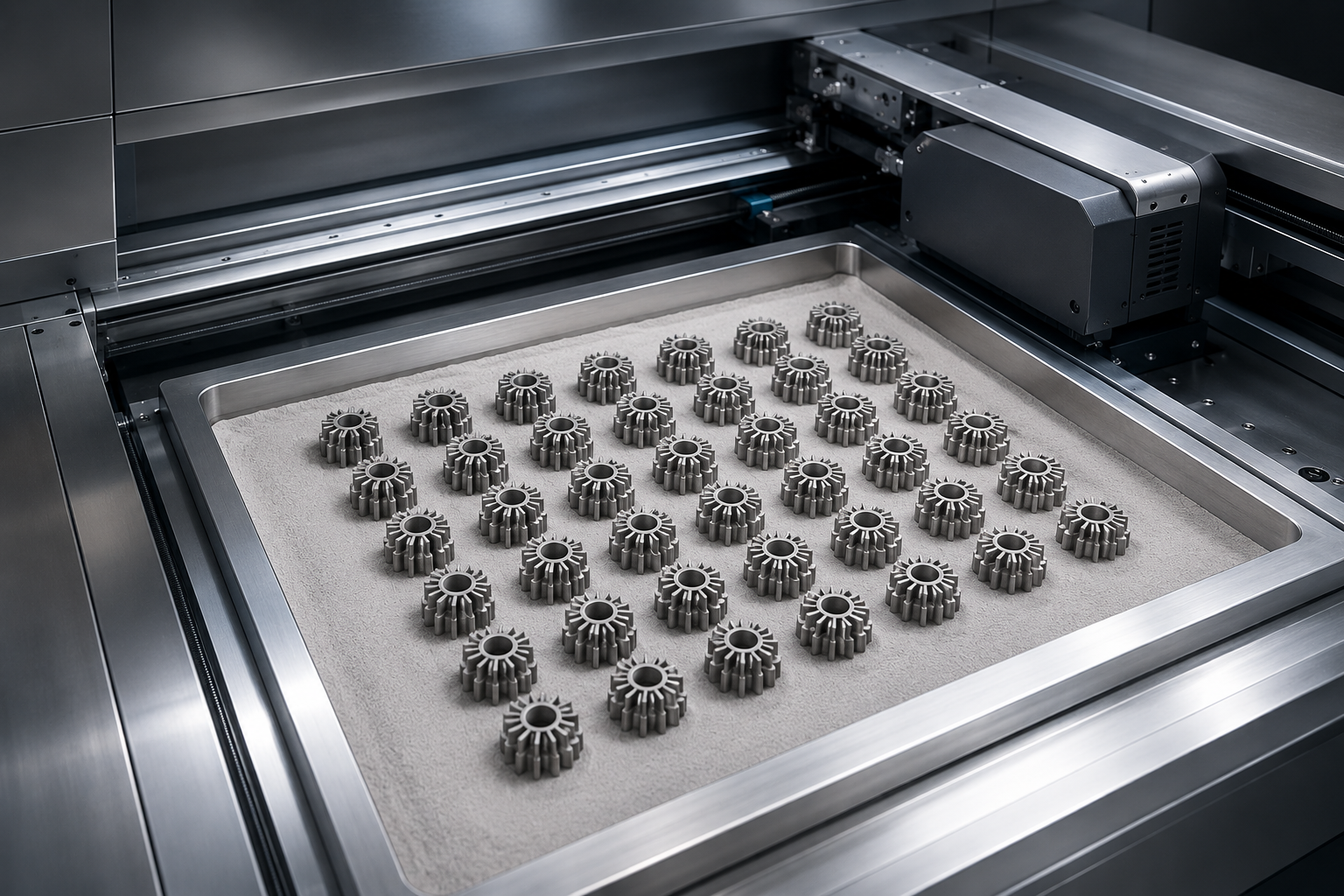
Unlike LPBF, where powder behavior is closely tied to melting and solidification, binder jetting places much greater emphasis on how particles pack together before sintering.
The powder bed effectively becomes the foundation for everything that follows.
Higher packing efficiency generally leads to improved green density, which can contribute to more predictable sintering behavior and final part properties. Poor packing can introduce variability that becomes difficult to correct later in the process.
This is one reason particle size distribution plays such an important role in binder jetting.
Many binder jetting powders utilize broader or engineered PSDs that allow smaller particles to fill gaps between larger particles. The goal is not simply to improve flow, but to create efficient particle packing throughout the powder bed.
Spreadability Is Different Than Flowability
One of the most important distinctions in binder jetting is the difference between flowability and spreadability.
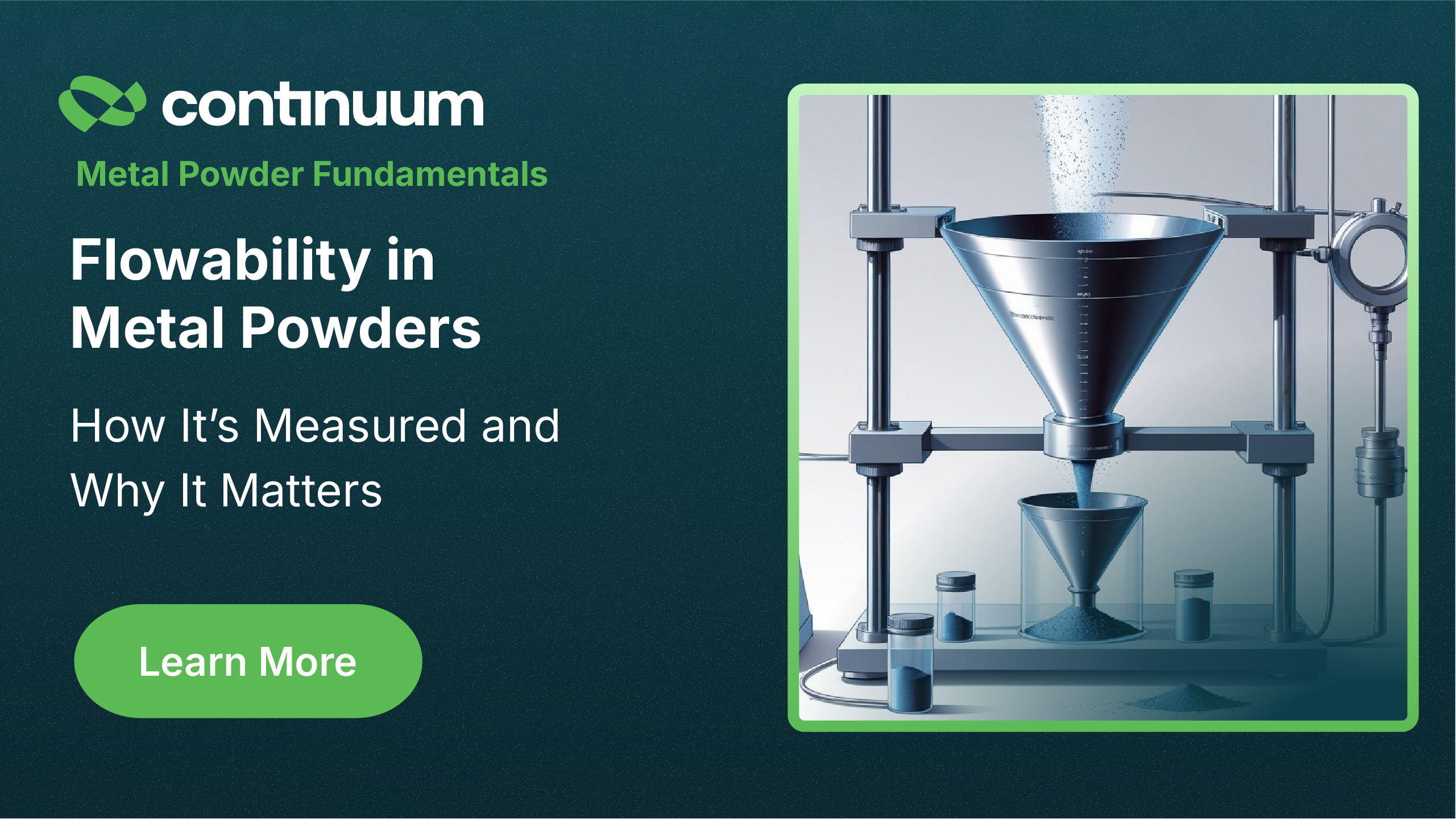
Traditional flow tests measure how powder moves through an opening under controlled conditions. Binder jetting, however, depends heavily on how powder forms smooth, uniform layers during recoating.
Those behaviors are related, but they are not identical.
A powder can exhibit acceptable flow characteristics while still creating challenges during layer formation. Likewise, a powder optimized solely around flowability may not provide the packing behavior required for successful sintering.
This is why binder jetting powder development often requires a broader view of powder behavior than a single flow metric can provide.
Sintering Is Where the Powder Really Gets Tested
One of the defining characteristics of binder jetting is that the final part is not fully formed during printing.
After printing, parts must be cured, depowdered, and sintered to achieve final density and mechanical properties.
That means powder characteristics continue influencing outcomes long after the build is complete.
Particle size distribution, particle contact, green density, and overall powder uniformity all affect how parts shrink and densify during sintering. Small differences in powder behavior can lead to changes in dimensional accuracy, distortion, or mechanical performance if they are not properly controlled.
For many applications, successful binder jetting is as much about predictable sintering as it is about successful printing.
New Materials Are Expanding the Possibilities
One of the more exciting developments in binder jetting is the growing interest in alloys that have historically been challenging to manufacture through traditional methods.
High-temperature superalloys are a good example.
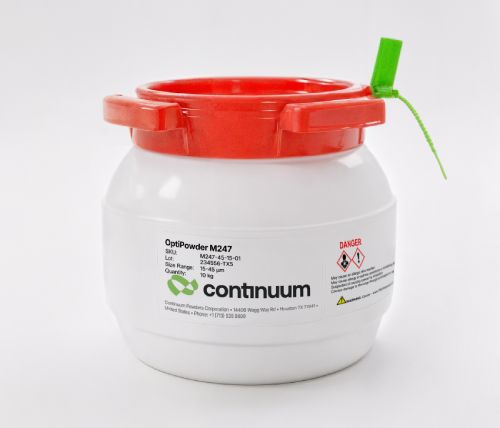
Materials such as M247LC are increasingly being evaluated for binder jetting because the process offers potential advantages in productivity, design flexibility, and scalability compared to conventional manufacturing routes.
As these materials become more complex and performance expectations increase, powder engineering becomes even more important. PSD, morphology, chemistry, and packing behavior all contribute to the success of the overall process.
Materials such as M247LC are increasingly being evaluated for binder jetting because the process offers potential advantages in productivity, design flexibility, and scalability compared to conventional manufacturing routes.
As these materials become more complex and performance expectations increase, powder engineering becomes even more important. PSD, morphology, chemistry, and packing behavior all contribute to the success of the overall process.
Powder Properties Are Connected
Binder jetting highlights something that is true across additive manufacturing but particularly evident in this process: powder properties do not operate independently.
PSD influences packing behavior. Packing behavior affects green density. Green density influences sintering response. Morphology and surface condition affect both spreading and binder interaction.
Looking at any one variable in isolation provides only a partial picture.
Successful binder jetting programs typically take a systems-level approach, evaluating how powder characteristics interact across the entire manufacturing workflow.
At Continuum Powders, this philosophy shapes how we support binder jetting applications. Different platforms, materials, and sintering strategies place different demands on powder behavior, which is why we work closely with customers to align PSD, flow characteristics, and material performance with specific application requirements. The objective is not simply to provide a printable powder, but to help create stable and repeatable manufacturing outcomes throughout the full process chain.
The Questions Are Changing
Early binder jetting discussions often focused on whether a material could be printed successfully.
Today, manufacturers are asking more sophisticated questions.
Can density be achieved consistently? Can shrinkage be controlled predictably? Can parts meet performance requirements repeatedly at production scale?
Those questions are fundamentally tied to materials.
As binder jetting continues to mature, powder engineering will become an increasingly important differentiator. The powders that succeed will not simply be those that print well, but those that support predictable and repeatable outcomes throughout printing, de-powdering, and sintering.