For much of the past decade, the metal additive manufacturing industry has focused on pushing the boundaries of machine performance. More lasers. Faster build speeds. Larger build volumes. Better productivity.
Those advances have been essential in moving additive manufacturing from prototyping into production. But as the technology matures, a different question is beginning to emerge.
What will actually differentiate manufacturers once high-performance machines and high-quality powders become the norm?
The answer is becoming increasingly clear. The next competitive advantage won't be another machine. It will be the material ecosystem that surrounds it.
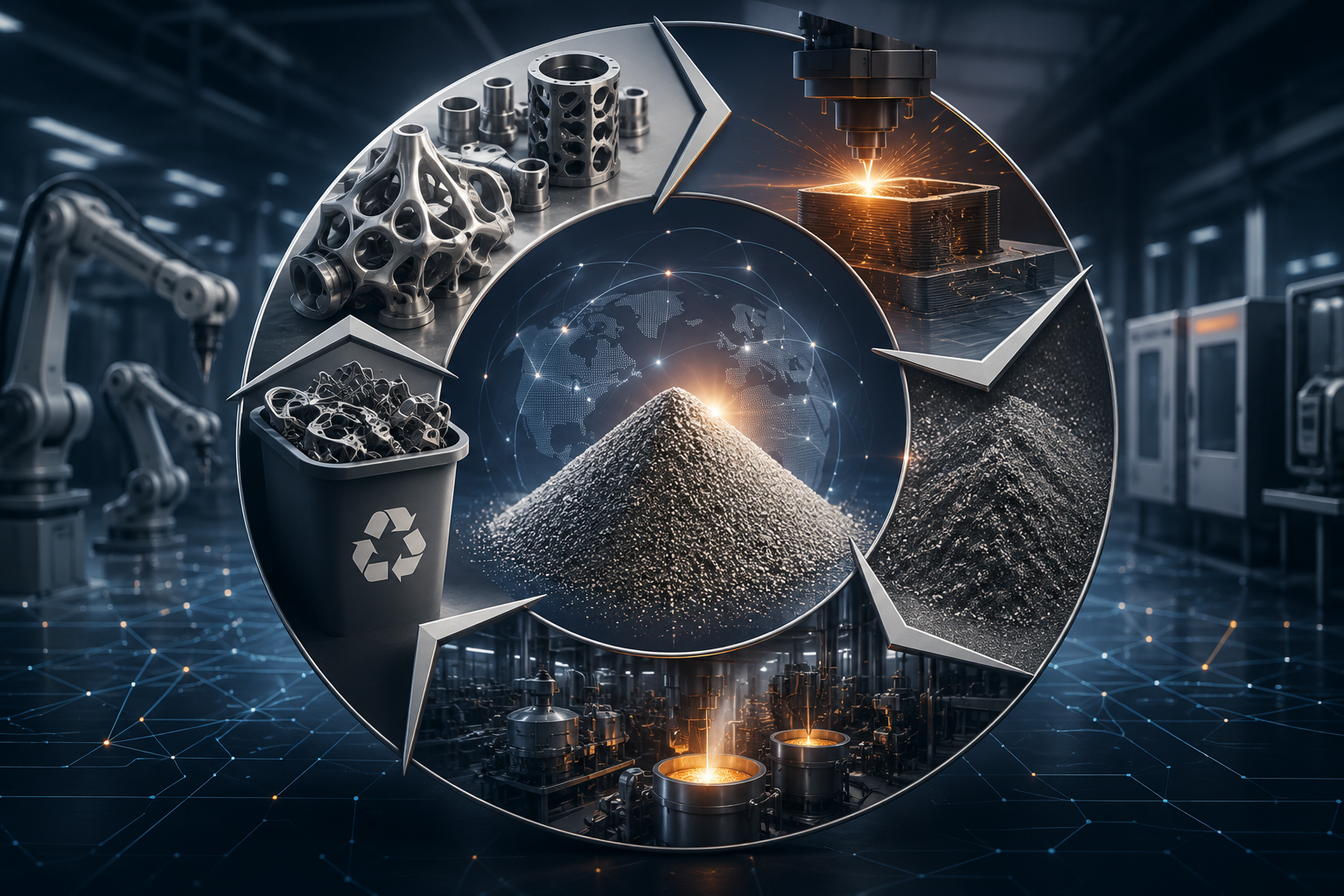
Manufacturers compared laser counts, build volumes, scan speeds, and productivity metrics. Powder suppliers focused on atomization technology, particle size distribution, chemistry, and quality certifications. These remain important, but they're no longer enough to stand out in an industry that is steadily maturing.
Today, many of the leading machine platforms can produce exceptional parts. Powder quality across qualified suppliers has also improved dramatically. As these technologies become more standardized, differentiation is moving elsewhere.
The next competitive advantage isn't likely to come from another incremental improvement in machine speed or a slightly tighter powder specification.
It will come from the strength of the material ecosystem surrounding those technologies.
Manufacturing Challenges Are Becoming More Complex
The conversations manufacturers are having today are noticeably different from those of a decade ago.
Instead of asking, "Can this alloy be printed?" engineers are asking:
- How quickly can we qualify a new material?
- Can we secure domestic supply for the next five years?
- What happens if our current supplier disappears?
- Can we develop a custom alloy without committing to production-scale volumes?
- How do we manage unused material throughout its lifecycle?
- How do we shorten development cycles without increasing risk?
These are not machine questions. They're ecosystem questions.
As additive manufacturing moves from prototyping into production, success increasingly depends on how well organizations manage the entire lifecycle of a material—from development and qualification through production, reuse, and long-term supply assurance.
Powder Is Becoming Part of a Larger Value Chain
Historically, powder suppliers were evaluated primarily on product quality and delivery. Those expectations remain foundational. Consistent chemistry, morphology, flowability, and particle size distribution will always matter.
But manufacturers increasingly expect more.
They're looking for suppliers who can help accelerate qualification, collaborate on new alloy development, provide application guidance, maintain traceability, support changing production requirements, and reduce material waste over time.
In other words, customers are no longer buying only powder. They're investing in relationships that reduce technical and commercial risk.
This broader role is also changing expectations around how new materials reach the market. Manufacturers increasingly want partners who can help bridge the gap between an idea and full-scale production. Whether developing a novel alloy, evaluating a new feedstock, or producing limited quantities for qualification, access to flexible manufacturing pathways can significantly shorten development timelines while reducing commercial risk.
This shift mirrors what has happened across other advanced manufacturing industries. As technologies mature, competitive advantage often moves away from individual components and toward the systems that connect them.
The Rise of the Material Ecosystem
A material ecosystem extends well beyond a production batch of powder.
It includes the ability to develop new alloys without excessive financial risk, produce specialty materials in practical quantities, support qualification and process development, maintain consistent quality across production campaigns, recover value from unused material, provide traceability throughout the material lifecycle, and adapt production as customer needs evolve.
The future of metal additive manufacturing won't be defined by who makes the fastest machine. It will be defined by who helps manufacturers build the strongest material ecosystem.
Perhaps one of the clearest examples of this shift is the growing demand for small-batch alloy development. Many manufacturers don't need thousands of kilograms of a new alloy on day one. They need enough material to validate a concept, qualify a process, or support early production without committing to full-scale manufacturing.
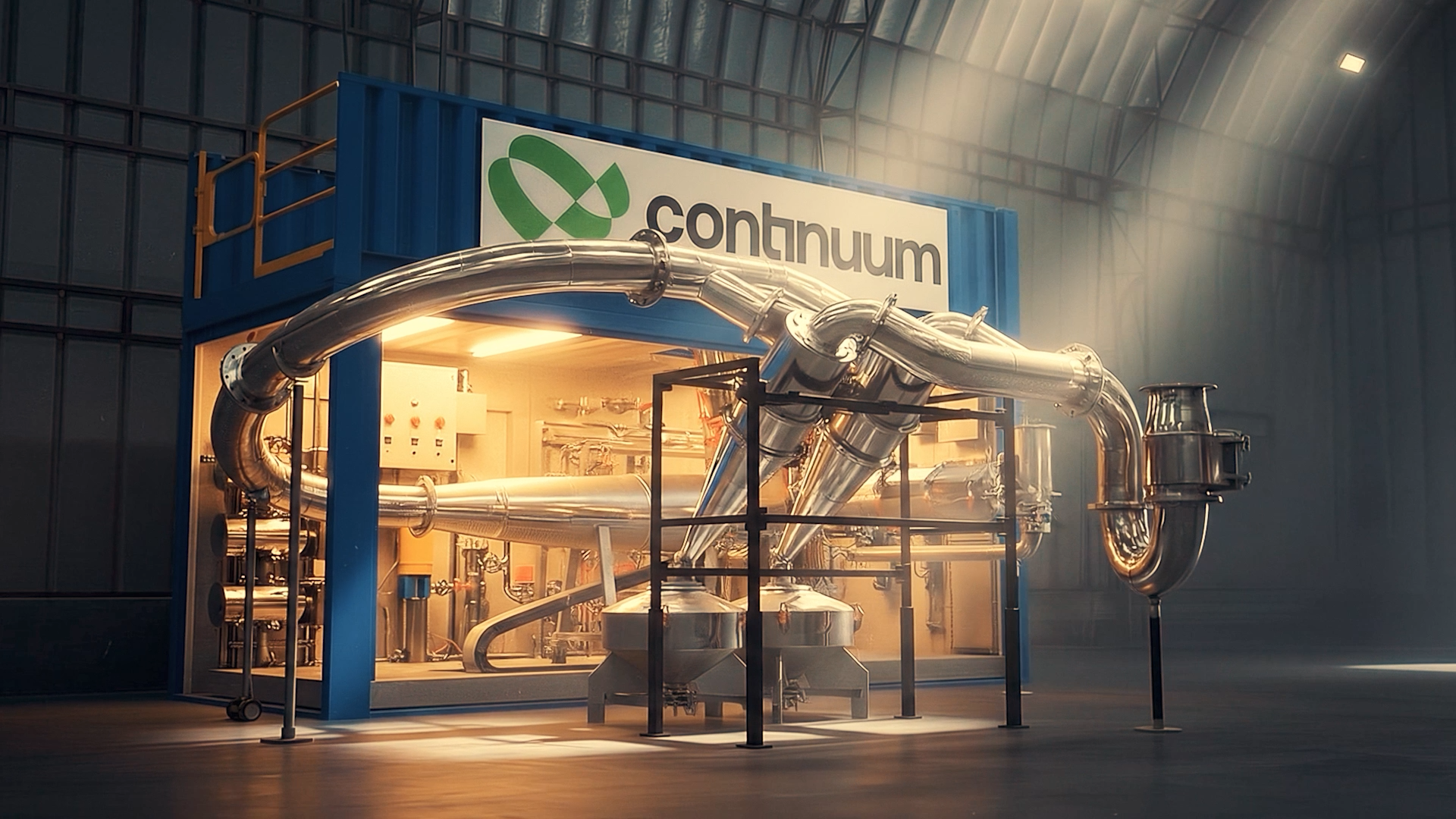
That challenge has helped drive new approaches such as Continuum Powders' Custom Foundry Runtime (CFR), which gives manufacturers access to production-quality atomized powders in application-appropriate quantities. Rather than forcing customers into traditional production economics, programs like CFR allow organizations to accelerate development while reducing both technical and financial risk.
Each capability has value on its own. Together, they create something much more powerful: flexibility.
That flexibility is becoming increasingly valuable in aerospace, defense, medical, energy, and other industries where product requirements change quickly but qualification timelines remain long and expensive.
Why This Matters More Than Ever
Several industry trends are accelerating the importance of material ecosystems.
Governments around the world are investing heavily in domestic manufacturing and critical mineral supply chains. Manufacturers are being asked to qualify new suppliers more quickly while reducing geopolitical risk. Defense programs increasingly require domestic production and secure sources of strategic materials. At the same time, pressure continues to reduce cost, improve sustainability, and shorten product development cycles.
Those priorities are increasingly reflected in government policy as well. Earlier this year, G7 leaders announced a coordinated critical minerals initiative focused on diversifying supply chains, expanding recycling, improving domestic processing, and strengthening long-term supply resilience. It's another indication that resilient material ecosystems are becoming a strategic priority—not just for manufacturers, but for governments as well.
These challenges cannot be solved by a machine alone. Nor can they be solved by a powder supplier focused only on producing more material. They require collaboration across the entire material lifecycle.
The organizations that can connect alloy development, qualification support, production flexibility, circular material strategies, and dependable long-term supply will be in a much stronger position than those competing solely on price or capacity.
From Commodity Supplier to Strategic Materials Partner
This evolution also changes the role of powder manufacturers. Rather than serving as transactional vendors, leading suppliers are becoming strategic partners that contribute to product development, manufacturing resilience, and long-term competitiveness.
That partnership may involve developing a new alloy, supporting qualification with limited production quantities, helping customers scale successfully into serial production, or creating pathways to recover value from unused powder and production scrap.
Increasingly, manufacturers are looking for partners that can support every stage of a material's journey—from alloy development and qualification through full-scale production and material lifecycle management. That evolution is precisely why capabilities like flexible atomization services, qualification support, and circular material strategies are becoming increasingly valuable.
In each case, the objective is the same: reducing uncertainty while increasing manufacturing agility.
For manufacturers, that often creates more value than incremental improvements in machine performance alone.
Increasingly, the question isn't who can make powder? It's who can help manufacturers bring new materials to market faster, qualify them with confidence, and sustain production over the long term.
Looking Beyond the Next Build
Metal additive manufacturing has reached an important point in its evolution. Machine technology will continue to improve. New alloys will continue to emerge. Production capacity will continue to expand.
But the companies that create the greatest long-term value are likely to be those that think beyond individual builds or individual powder lots.
They will build integrated material ecosystems that connect innovation, qualification, production, supply assurance, and circularity into a single, resilient strategy.
That shift is already reshaping how forward-looking manufacturers and suppliers invest. Recent announcements from companies like Beehive Industries, which continues to expand its additive manufacturing capacity to meet growing aerospace and defense demand, demonstrate that scaling production requires more than additional machines. It requires reliable access to qualified materials, application expertise, and resilient supply chains that can support long-term industrial production.
Rather than focusing solely on increasing powder production capacity, leading material suppliers are expanding capabilities around alloy development, flexible atomization, qualification support, circular material strategies, and long-term supply resilience.
Continuum's investments in technologies such as Custom Foundry Runtime (CFR) reflect this broader evolution. The goal is no longer simply to produce high-quality powder, but to help manufacturers move more efficiently from concept to qualification to production while building more resilient material supply chains.
As additive manufacturing becomes an increasingly important production technology, the organizations that embrace this ecosystem approach will be best positioned to create lasting competitive advantage.